Language: English











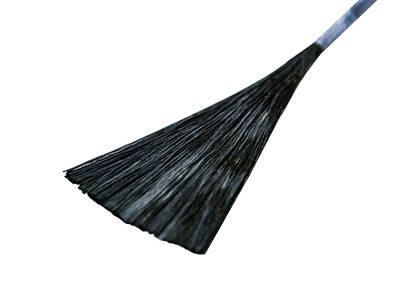
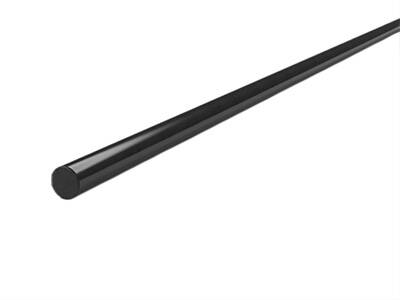
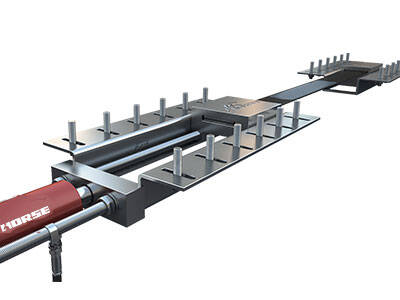
Photovoltaic Reinforced Concrete Pier
Carbon Fiber Strengthen
For aging ground-mounted photovoltaic stations exhibiting longitudinal splitting and base flexural cracking in circular RC piers, the combined vertical CFRP bonding + continuous circumferential wrapping scheme provides a structurally rigorous, lightweight retrofit.
Project
| Item | Description |
|---|---|
| Facility type | Ground-mounted photovoltaic power station, arid/semi-arid terrain |
| Service duration | 8 years at time of assessment |
| Pier type | Cast-in-place reinforced concrete circular piers, Ø 400 mm, height 1.8–2.4 m above grade, topped with steel brackets connecting to aluminum racking |
| Number of piers inspected | 126 (out of 340 total) |
| Defect rate | 38 % of inspected piers exhibited visible cracking or cover spalling |

Structural Assessment
1) Longitudinal (vertical) cracks
34 piers displayed one or more longitudinal cracks running along the full exposed height.
Measured crack widths: 0.15–0.60 mm, widest at mid-height and tapering toward top and base.
Cover-meter readings confirmed that crack paths aligned with the position of longitudinal reinforcement, and half-cell potential mapping indicated active corrosion at 70 % of these locations.
2) Horizontal (circumferential) cracks at pier base
14 piers exhibited horizontal cracks on the windward face, 100–300 mm above ground level.
Crack widths: 0.10–0.35 mm, wider on the dominant wind direction side.
3) Several concrete piers showed both concurrently.

Reinforcement Scheme
The retrofit scheme follows ACI 440.2R-17 and addresses both defect types with a two-layer composite layout:


Layer 1 — Longitudinal CFRP fabric (vertical)
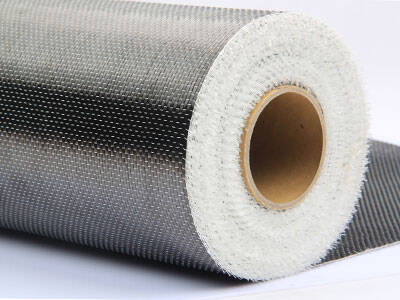
Unidirectional carbon fiber fabric (300 g/m²) applied vertically on the dominant wind direction face and the opposite face. This layer bridges horizontal flexural cracks at the base and restores bending capacity. On site, these vertical strips are applied first, directly over the repaired and primed concrete surface.

Layer 2 — Continuous circumferential CFRP wrapping (full-height hoop)
Same unidirectional fabric applied horizontally in a continuous spiral over the full exposed pier height, 50 % overlap, two plies. On site, the wrapping starts from the excavated base and proceeds upward, with workers operating in the open excavation pit around the pier — as documented in project photographs. The continuous hoop layer provides lateral confinement to arrest longitudinal splitting cracks and supplements transverse reinforcement lost to corrosion.

The two-layer system is clearly distinguishable on the finished piers: the lower section shows the combined vertical + hoop layers as a denser black band, while the upper section transitions to hoop-only wrapping — reflecting the stress distribution where the base region demands both flexural and confinement reinforcement.

| Component | Specification | Function |
|---|---|---|
| HM-300 carbon fiber fabric | 300 g/m² unidirectional, tensile strength ≥ 3,400 MPa, modulus ≥ 240 GPa, elongation ≥ 1.7 % | Primary reinforcement (Layer 1 + Layer 2) |
| HM-180 primer | Low-viscosity epoxy primer, 200–300 g/m² coverage | Substrate penetration and bond preparation |
| HM-180CE putty | Epoxy putty, thixotropic | Surface profiling, void filling, and cover repair before fabric application |
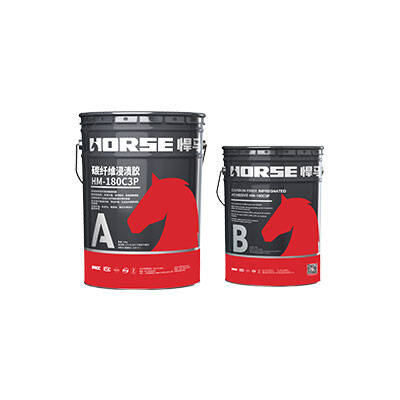
| HM-180C3P impregnating adhesive | Two-component structural epoxy, Tg ≥ 60 °C, compatible with exterior exposure | Fabric saturation and structural bonding |
| UV-resistant top coat | Aliphatic polyurethane, 25-year weathering rating | Long-term UV and moisture protection |
Documentation provided:
ASTM test reports for all materials
Factory certificates of conformity
Material safety data sheets
Recommended storage and shelf-life guidelines